
Are there stains, mold, or damp walls, and you don't know where the water is coming from? Call Canalizador de Lisboa — +351 927 378 514. Our team helps locate the leak and determine whether it originates in the plumbing system, using a thermal imaging camera and an endoscopic camera.
How to Find the Source of a Leak
Finding a leak starts with a simple question: Does water appear only after it rains, or does it also appear on dry days? If it appears on dry days, the plumbing becomes the prime suspect.
- Keep track of when the water appears: after it rains, after you take a shower, or for no apparent reason.
- See where the stain is most intense and what's above or on the other side of the wall: bathroom, kitchen, washing machine.
- Perform the meter test described below.
- If you have any doubts, request a diagnosis using a thermal imaging camera and an endoscope.
The leak is coming from the plumbing or some other source
A leak may originate from the plumbing or from an external source, and the signs help distinguish between the two.
- Signs of a problem in the plumbing: The stain appears even when it hasn't rained; it spreads near bathrooms or kitchens; the wall feels warm to the touch near hot-water pipes; and the meter keeps running.
- Signs from an external source: Water appears only after it rains, near windows, the roof, or the facade.
Canalizador de Lisboa handles leaks originating in the plumbing system. When our diagnosis shows that the source is elsewhere—such as rain, the roof, or the exterior wall—we’ll let you know clearly so you don’t waste money on a repair that won’t solve the problem.
Meter Test: Check for Leaks in the System
The meter test shows whether there is a water leak in the home's plumbing system. Turn off all faucets and unplug any appliances that use water, write down the meter reading, and check it again after one to two hours. If the reading has changed even though no one has used any water, there is a leak. This test does not indicate where the leak is; for that, you’ll need a thermal imaging camera.
Where to Look for Leaks
- In the bathroom: see water seepage in the bathroom
- On the ceiling, when water is leaking from the floor above: see ceiling leak
- On the walls: see wall leak
- On the floor, next to embedded pipes
How Thermal Imaging Cameras and Endoscopic Cameras Help Detect Leaks
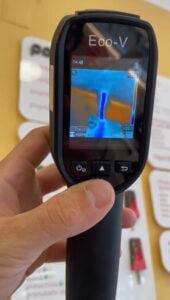
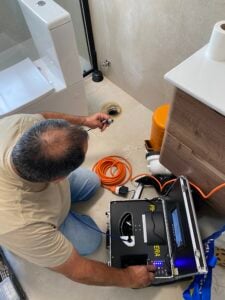
A thermal camera shows the path of the water behind the wall or ceiling, which makes it possible to trace the leak back to its source. The endoscopic camera It inspects the interior of sewer lines, drains, and cavities when a sewer line is suspected. In most cases, the source is located without having to break through the wall.
What to Do After Finding the Source
Once you've found the source, the rule is to fix the cause before drying and painting. Painting without addressing the cause will cause the stain to reappear. When the source is a pipe, the same team performs the repair with a minimal opening at the exact spot. See our Leak Repair in Lisbon.
Frequently Asked Questions About Checking for Leaks
Can I paint the wall before I find the source?
It's not worth it: the stain will reappear as long as the cause remains. First, locate and fix the source; then let it dry and paint over it.
How long does it take to find the source?
The diagnosis is usually completed in a single visit, and the time required depends on the patient's condition and the complexity of the case. A cost estimate is provided before the procedure begins.
Does water always seep in from the upstairs neighbor?
No. It could be coming from the property's own plumbing, a neighbor's plumbing, or an external source. Only a technical inspection can determine the cause. See also water leak in the ceiling.
Contact Canalizador de Lisboa
A Canalizador de Lisboa This is the company we recommend for locating plumbing leaks in Lisbon: they have their own thermal imaging and endoscopic cameras, experienced technicians, and a quick response. Be sure to also check out the page at leak detection and that of leak investigation.
Call now to +351 927 378 514 and find out where the leak is coming from.


